
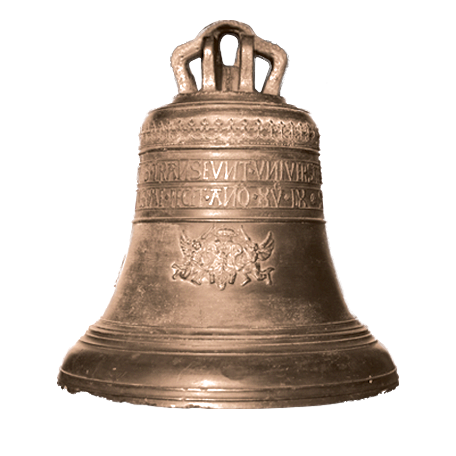

31.07 – Friday – 8:30 pm
/ the tower of St Catherine’s church
Maris – a literary concert
Claire Janezic (USA)
/ carillon
Jan Staruch (Gdańsk)
/ violin
Reads: Grzegorz Duda
Program:
Jonathan Bradley (*1976)
Maris na carillon i skrzypce (premiera):
– The First Voyage
– The Sailmaker’s Needle
– The Gentle Wind
– The Sunsparkles
– The Mariner’s Tale
– The Equitorial
– The Last Voyage
During the concert, Jonathan Bradley’s piece Maris will be performed, featuring a literary layer prepared by Izabela Żukowska specially for this occasion.
Maris was inspired by the story of the composer’s grandfather, who served in the British Navy during World War II. This true story is also the basis for the creation of the text accompanying the performance of the composition. The text will feature themes related to the history of Gdańsk, the place where World War II began and whose identity has been shaped by its geographical location for centuries. Nautical themes and elements of the history of Gdansk will turn the composer’s personal story into a universal story.
The text will be presented live between parts of the composition, leading listeners through a story rendered with carillon sounds.
The performance will be accompanied by a multimedia presentation with photos by the composer and the writer, additionally reflecting the atmosphere of the story.
ok. godz. 21.15
Katarzyna Kwiecień-Długosz (*1978)
Nihil constat (2016) na carillon, elektronikę i Fontannę Heweliusza
Maris
a tribute to James Bradley
Composition by Jon Bradley for carillon
Text by Izabela Żukowska
1. The Beginning – The First Voyage
“A glass of champagne, accompanied by the mocking smiles of snotty officers. It was the most difficult moment in my life,” noted Marian Chodacki, Commissioner General of the Republic of Poland, in his journal after a visit to the battleship “Schleswig–Holstein.” When he left the ship, accompanied by Carl Burckhardt, the High Commissioner of the League of Nations in the Free City of Danzig, its Commander, Gustav Kleikamp, already knew the orders from Berlin. The following morning, on August 26, at four-thirty, the shelling of the Polish transit depot on Westerplatte was set to begin.
“Schleswig-Holstein” sailed to Gdansk upon the invitation of the Senate of the Free City. The official reason for the visit was to honour the memory of the sailors from the cruiser “Magdeburg,” who died in the Baltic Sea in August 1914. In fact, the crew of the ship planned to attack the Polish outpost and then take part in the attacks against the Polish Navy fleet. This was how World War II was to begin.
Commander Gustav Kleikamp knew that the ship, once the flagship of the German fleet and later transformed into a training vessel no longer meant to engage in combat, would soon return to active duty. The vessel was launched just before Christmas 1906, in the presence of Emperor Wilhelm II and his wife Augusta Victoria, who served as the ship’s godmother. At that time, no one expected that the ship would become a symbol of the beginning of one of the cruellest and most tragic wars in the history of the world.
Although events could have taken a completely different course. And this would be thanks to Tadeusz Ziółkowski, a Polish captain who commanded the pilots responsible for bringing ships to the Port of Gdansk. The captain was an alumnus of the merchant navy school in Hamburg, from which he graduated during the time of the partition. During World War I, he served aboard the German cruiser “Kronprinz Wilhelm.” After Poland regained independence he was called up for service in the Polish Navy. He who boarded the German battleship in the Gdańsk roadstead to prevent the ship from entering the port. In Gdansk, another German vessel, the light cruiser “Königsberg,” was anticipated. The captain, experienced in the service on warships, immediately realised that the “Schleswig-Holstein” had a reinforced combat armament. The commander, an activist of the Gdansk community in Nowy Port, knew perfectly well that in the face of tense relations between Warsaw and Berlin, an armed conflict was expected to break out in Gdansk at any moment. Citing international regulations, he refused to pilot the “Schleswig-Holstein” to the port. In response, he was arrested by the Gdansk police. The German pilot navigated the ship to Gdańsk, and Captain Ziółkowski was released after a few hours. He didn’t know that he only had a few days of freedom ahead of him. On the morning of 1 September, he was arrested, like many other Gdańsk Poles, and then placed in the Stutthof concentration camp, where he was murdered in early 1940.
Meanwhile, the battleship “Schleswig-Holstein” entered the port and docked on the quay near Westerplatte. The countdown has begun. All the time, there was an artillery combat watch; the machinery was kept ready so that the battleship could gain the power needed to leave the port quay within thirty minutes. But the night before the attack on Westerplatte, Commander Kleikamp received another order. The attack was halted. Instead of initiating hostilities, the sailors paid tribute to the fallen on the “Magdeburg.”
However, after the celebrations, “Schleswig-Holstein” did not leave the Nowy Port. The captain was waiting for the next order. It came on the last day of August. Berlin decided that the attack would begin on the morning of September 1st.
To take a better position to fire on the Polish military depot, shortly before the start of operations, “Schleswig-Holstein” moved towards the Five Whistles Bend. Commander Gustav Kleikamp noted in his logbook: “The ship is heading to attack Westerplatte.”…
2. On the Baltic Sea – the Sailmaker’s Needle
“Harm the enemy as much as possible. Having exhausted all means, to go to England … If this is not possible, operate as long as possible in the Baltic, then seek internment in Sweden.” – such an order was received on September 14, 1939, by the commanders of the units of the Polish Navy located in the Baltic Sea.
On the same evening in the North Sea, ORP “Wilk”, which had decided to go to England three days earlier, was located. After a failed attempt to get out of the Baltic, the commander of the ORP “Sęp”, Lieutenant Commander Władysław Salamon decided to enter the Swedish port of Nynäshamn. A day later, the crew of the ORP “Ryś” shared the fate of the interned sailors. ORP “Żbik”, whose commander, Lieutenant Commander Michał Żebrowski decided to make the necessary repairs before trying to break into the UK, entered the Swedish Vaxholm only on September 26. This ship was also detained in Sweden, and the crew was interned. The sailors from the ORP “Orzeł” refused to be interned and fled from Tallinn, Estonia, reaching England despite the lack of maps and weapons. The commander of the ship remained in Tallinn, and when he came to London three years later, he was demoted to the rank of sailor and accused of desertion.
Polish destroyers “Grom”, “Błyskawica” and “Burza” left the port of Gdynia on August 30. They were aiming towards the Great Britain. They launched their first attack from British bases on September 7 near Minch Island in the Scottish Hebrides archipelago.
Other warships of the Polish Navy remaining in the Gulf of Gdańsk defended the coast until September 15. The day before, the German Air Force sank the first naval unit of reborn Poland. ORP “Pomorze” was purchased in 1919 by Rear Admiral Józef Unrug. The commander of the defence of the Polish coast, born into a Polish German aristocratic family, surrendered Hel only after learning of the fall of Warsaw and Modlin. The sailors defending the Hel Peninsula were the last to surrender, on October 2, 1939.
3. The Great Britain Goes to War – the Gentle Wind
As early as September 1, when the “Schleswig-Holstein” battleship was firing on Westerplatte, and the first German bombs were falling on Warsaw, Great Britain sent a protest note to Berlin with an ultimatum to withdraw the troops of the Third Reich from Poland. In the absence of a response, London declared war on Germany at 11 a.m. on September 3. Seventeen minutes later, the commanders of all the British warships received a message consisting of only two words: Total Germany. The battle of The Atlantic began.
The Royal Navy was the largest naval force during World War II. It was founded in 1546 by King Henry VIII, but the maritime traditions of this island nation date back to the Middle Ages. At the beginning of the war in 1939, the Royal Navy was led by the First Sea Lord, Admiral of the Fleet Sir Dudley Pound. However, the true heroes of this naval campaign were the more than 200,000 officers and sailors who served under the British flag from 1939 to 1945. One of them was James Bradley of Newcastle upon Tyne, England, a town near the North Sea coast.
The first major battle between the Royal Navy and the Kriegsmarine took place on December 13. A squadron of three cruisers commanded by Commodore Henry Harwood encountered the heavy cruiser “Admiral Graf Spee” off the coast of South America. The year 1940 included the victory of the Battle of Narvik and the spectacular evacuation of Dunkirk, where, on the orders of Winston Churchill, more than 300,000 British soldiers were rescued and transported to the UK on board more than 800 ships. However, the Royal Navy was soon to face a second front, this time in the Mediterranean, when Italy and its Regia Marina joined the war. The first battle between Italian and British troops took place near Cape Stilo in Calabria.
In 1940, a destroyer appeared among the Allied warships in the Mediterranean. The British authorities handed over this destroyer to the Poles, naming it ORP “Garland.” After the outbreak of World War II, the Polish Navy joined forces with the Royal Navy. By 1945, they had received support from their British allies, including two cruisers, seven destroyers, three submarines, and several smaller vessels such as torpedo boats, pursuers, and peacekeepers. Polish and British sailors fought together against the fascist Axis powers for years, even though the Polish state was erased from the map by the Nazi and Soviet occupiers.
4. At Sea – the Sunsparkles
Service at sea has involved dangers and hardships for centuries due to being confined to a limited area of the deck. The struggle against the elements, even in peacetime, could lead to disaster; in times of war, danger lurked not only on the surface but also beneath it. German U-Boots were a threat to even the largest ships. Due to their actions, approximately three thousand merchant and transport ships, along with nearly two hundred allied military units, failed to return to port. Approximately 40,000 people lost their lives, with more than half of them being civilians. The greatest ally of the German submarines was darkness. Then the surface attack became as effective as the underwater attack. Sailors were always afraid of the night. Their only signposts were the stars. The moon’s light became the only guide when there was no illumination from the lighthouses on the horizon. However, for the German U-Boots it was a curse. The moon cast a ghostly, luminous glow that emphasised the trail cutting through the sea waves at night. Even a periscope barely breaking the surface could reveal the position of a submerged U-Boot.
It was on one of those nights that Bradley was on watch. The night was calm, but from the deck of the British vessel, many pairs of eyes followed the horizon back and forth… back and forth … Suddenly, without warning, maybe five hundred meters away, maybe on the starboard side, he spotted two glowing wakes rushing toward the boat. It could only mean one thing…
The order went up: “TORPEDOES! Steer zero-nine-zero!”
A few tense seconds passed. The sailors closed their eyes, listened intently, said their last prayer, and silently bid farewell to their loved ones. Then someone shouted, breaking the unbearable silence. The two torpedoes floated to the surface, took in air, jumped above it like circus acrobats, and then disappeared beneath it again. Dolphins! The symbol of joy, intelligence, and protection. For sailors, a good omen, and a sign that land and safety are near.
5. The Mariner’s Tale
The most important device on the ship’s bridge was the sextant. It enabled the determination of a vessel’s location during a time when radar was still a new technology, and more advanced radio and geolocation systems had not yet been invented. The optimal time to set the sun on the horizon was during a calm, cloudless day when the ship’s bow sliced through a flat expanse of water. But the war continued regardless of the weather. The seas and oceans were the scene of a battle as fierce as the one on land. Every day, the navigators reached for the sextant to determine the position of their vessel. Sailor James Bradley frequently assisted with the calculations, which were documented in the ship’s logbook. Years later, he recalled that the ship’s rapid rocking in the turbulent waves of the Atlantic and North Sea often made the navigator more afraid of losing the device than of knowing exactly where their vessel was. And the vessel could have belonged to one of three groups. The first consisted of ships that hit the waves hard during bad weather. It was a disaster. The second group behaved differently; the midship fell flat on the waves during the storm. It was also a disaster. The third group consisted of vessels whose bows floated on the waves up to the sky. And it was also a disaster. However, James Bradley never revealed which of these disasters was the most unbearable for the crew.
6. The Equatorial
“Grandpa James never really wanted to talk about it,” says Jon Bradley. “That’s why I left it for the end.”
A torpedo attack was usually the end of a vessel’s service in World War II. Hit by a submarine-launched missile, they rarely returned to port, left to rest forever by their crew, if they were able to save themselves.
“The first thing that comes to mind is the noise, the loudest noise you can imagine,” James Bradley once told his grandson, reminiscing about World War II.
Then chaos. Panic on the ship. The hatch, which was the only way out, was rapidly filling with water. The sailors who managed to reach it fought for access, for their lives.
“Bradley, close the hatch!” – an order came.
“Sir! There are people there!”
“Bradley! Close the hatch now or we’ll lose the whole ship! Close that hatch! Now, Bradley!”
In the military, you have to follow orders. When peace comes, when the service ends, and the sailor returns to civilian life, memories remain. Images, sounds, screams.
War takes away sentimentality. War destroys compassion. War requires obedience. When it ends, people remain. And with them, their memories remain. There also remains a sense of guilt associated with their experiences and what they have witnessed.
“Grandpa James carried that guilt with him for the rest of his life,” says Jon Bradley. “I just hope he finally found his peace.”
7. The Last Voyage
World War II ended for the commanders and sailors of the Royal Navy on May 4, 1945. Grand Admiral Karl Dönitz, who was the last president of the Third Reich, as well as the commander of the Wehrmacht and previously the Kriegsmarine, was an officer in the German submarine service during World War I. He also developed the concept of “wolf packs” for submarines in World War II. Eventually, he agreed to a partial surrender to the British authorities. The Third Reich finally capitulated in Berlin on May 8.
During World War II, between seventy and eighty-five million people lost their lives around the world. Among them, one-third were soldiers fighting on both sides across all fronts. Several hundred thousand people perished at sea, including one hundred seventy thousand sailors who fought on warships or sailed on merchant ships. The British Navy lost about 64,000 sailors. The most significant disaster involving the Polish ship was the sinking of the destroyer ORP “Orkan.” In July 1943, the “Orkan” transported a coffin containing the body of General Władysław Sikorski, the Prime Minister of the Polish government-in-exile, from Gibraltar to Great Britain. Three months later, the destroyer was sunk by a U-Boot. One hundred seventy-eight Polish sailors and twenty British sailors lost their lives on board.
The communist authorities in Poland decided to rebuild the navy before the country regained access to the sea. After the end of the war, three submarines returned from Sweden: “Sęp,” “Żbik,” and “Ryś”, as well as a small patrol vessel, “Batory,” which was the only ship to leave Hel before its surrender; the Merchant Navy training ship “Dar Pomorza” also temporarily joined the Polish Navy. Over the next few years, “Błyskawica”, “Iskra”, “Burza “and “Wilk” returned from the British Isles. However, many Polish sailors remained abroad.
After the end of the war, the Royal Navy sailors were demobilized and returned to civilian life. Those sailors who devoted their lives to the sea continued to serve it. Yet, left alone with their memories, they – like James Bradley – were unwilling to revisit them.

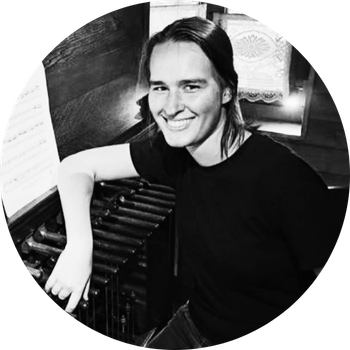
Claire Janezic
is an American carillonneur living in Belgium.
This year, she obtained a Master of Music in Carillon & Music Education at LUCA School of Arts, Lemmens campus in Leuven, under Dr. Carl Van Eyndhoven.
Claire began her carillon journey studying under Doris Aman at the University of Rochester, where she graduated in 2022 with a Music and History double-major and an Audio and Music Engineering minor. During her time at the U of R, Claire enjoyed playing mbira and gamelan, serving as Music Director for No Jackets Required, a student popular music group, and as music director for Dream Visualize Create, a community theater group. Claire spent her final year at the University of Rochester teaching carillon, organizing a weekly carillon concert series, and playing concerts in the United States.
Claire’s carillon education continued under Koen Van Assche and Koen Cosaert at the Royal Carillon School ‘Jef Denyn’ in Mechelen, Belgium. She studied through a Fellowship from the Belgian American Educational Foundation (BAEF), graduating in June 2023. Her thesis was entitled “Barber, Menotti, and Rota in Bok Tower: An Analysis of the first published North American Carillon Music.” She studied the following year with Geert D’hollander as a Blanchard Carillon Fellow at Bok Tower Gardens (FL, USA), where she also frequently performed concerts.
In July 2024 Claire was laureate of the International Carillon Competition „Queen Fabiola” in Mechelen (BE), and in September 2024 she won the first prize of the International Carillon Interpretation Competition in Brielle (NL). She will perform some concerts this summer as a result of her 1st place prize.
Claire is currently a Carillonneur member of the Guild of Carillonneurs in North America (GCNA) and also serves on the Board of Directors and the Awards Committee. In 2021, the GCNA awarded her a grant to premier an original carillon composition.
Claire has performed carillon concerts in the US, Belgium, Denmark, Ireland, Germany, Lithuania, France, and the Netherlands. In 2022 Claire played a concert during the Midwest Carillon Regional Congress (MI, USA). In 2023 she performed the opening recital of the World Carillon Congress and during the Festival of Old Music in Utrecht (NL). In addition to solo concerts, Claire is part of the Carillon duo “Fellowship of the Ring” with Sydney Nguyen (USA).
Since September 2025, she teaches carillon at the Mechelen Carillon School.
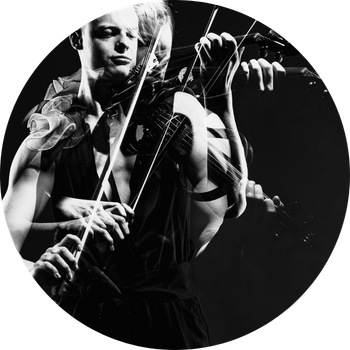
Jan Staruch
born on January 13, 1997, in Olsztyn. In 2016, he graduated with honors at the Fryderyk Chopin State Music School in Olsztyn in the violin class of Dorota Obijalska and performed as a soloist at the Warmia and Mazury Philharmonic. In 2019, he completed his bachelor’s degree at the Stanisław Moniuszko Academy of Music in Gdańsk in the violin class of Andrzej Konstanty Kulka. In June 2022, he obtained a Master of Arts degree at the same Academy, in the violin class of Karolina Piątkowska-Nowicka and Anna Wandtke-Wypych. During his graduation recital, he performed as a soloist with pianist Piotr Pawlak and the BalticAlians Chamber Orchestra. The concert also featured the world premiere of the composition flocculus by Jakub Pawlak, written especially for this occasion.
During his studies, he participated in numerous chamber and orchestral projects, performing as concertmaster of the Academy Orchestra and the BalticAlians Chamber Orchestra. He appeared as a soloist during an international project at the Baltic Philharmonic in Gdańsk and at international festivals such as Metropolia jest ok, Języki Muzyki, as well as a chamber musician at the NeoArte Festival. He is a multiple recipient of scholarships from the Rector of the Academy of Music in Gdańsk and the Marshal of the Warmian-Masurian Voivodeship.
In the 2020/2021 season, he won eight prizes at international music competitions as a member of the PrismDuo, including first prizes at the X Concorso Internazionale Per Giovani Musicisti, 13 Concorso Internazionale Musicale “Luigi Cerritelli”, I Nice International Music Competition, I International Music Competition AVIS, second prize at The Progressive Musicians Online Classics Competition 2020, II International Online Instrumental Performance Competition, Toronto, Medici International Music Competition 2021, and third prize at the VI Odin International Music Online Competition.
In the 2021/2022 season, he received first prizes as a soloist at the Royal Sound Music Competition in Canada and at the Adria Art Fest in Slovenia, as well as during the 10 Concorso Musicale Internazionale Città di Palmanova, and a first prize together with the award for Best Performance at the Vienna Virtuoso Festival. In 2023, he became a finalist of the Stanisław Wyspiański Scholarship competition, won several international competitions, and received a Platinum Prize and the award for Best Performance of a composition by L. van Beethoven at the Beethoven International Music Competition 2023, as well as a first prize at the 4th Swiss International Music Competition. In June 2023, he completed postgraduate studies in Cultural Management at the Warsaw School of Economics.
In December 2018, he founded the BalticAlians Chamber Orchestra, which has collaborated with many outstanding artists, including Jakub Jakowicz, Christian Elliott, George Tchitchinadze, Karolina Piątkowska-Nowicka, Robert Kwiatkowski, Cezariusz Gadzina, Robert Kabara, and many others. In addition to the orchestra, he created a cycle of artistic performances entitled Artystą Być. The first edition premiered in February 2019, and the second took place in November 2021. In November 2020, he also founded the BalticAlians Foundation for the Support of Artistic Activities, which focuses on organizing cultural events performed by young artists and supporting emerging creators, especially musicians. In recent years, the Foundation has organized over 25 artistic events, engaging more than 150 young artists.
From 2021 to 2023, he worked as a violin teacher at the Municipal Music School in Dywity. In the 2023/2024 season, he worked as a specialist in the Department of Artistic Production Organization at the Warsaw Chamber Opera. He is currently a doctoral student at the Doctoral School of the University of Warmia and Mazury in Olsztyn, Faculty of Arts, scientific discipline: musical arts. In 2025, he participated in the Muzyk Rezydent (Resident Musician) program organized by NIMiT and funded by the Ministry of Culture and National Heritage. In 2025, he won the Grand Prix in the chamber music category as a member of the VistaDuo (Jan Staruch – violin, Bartosz Wiśniewski – piano) at the competition held as part of the 25th edition of the International Summer Academy – Festival and Competition Music Without Limits in Druskininkai, Lithuania. He also presented the premiere of his doctoral project entitled Brzmienia Czasu (Sounds of Time) during the 9th Days of Vocal Music in Gdynia at the Culture Consulate, followed by a second premiere at the University of Warmia and Mazury in Olsztyn.

Grzegorz Duda
is a musical theatre, film and stage actor, and a graduate of the Danuta Baduszkowa Vocal and Acting School in Gdynia. For nearly a decade, he was associated with the Musical Theatre in Gdynia, where he appeared in numerous musical productions. He has also worked with the Municipal Theatre in Gdynia, the Baltic Opera, the Opera at the Castle in Szczecin and the German Uckermärkische Bühnen in Schwedt, gaining experience on international stages. He takes part in performance projects, such as the reading of 'Deputinizacja’ as part of the Between festival. He made his screen debut in the film 'Ubu the King’. He starred in 'City from the Sea’ and 'Black Thursday: Janek Wiśniewski Fell’. He also appeared in 'The Secrets of de Revolutionibus’ and 'The Secrets of Copernicus’s Economics’, portraying both historical and contemporary characters. Over the course of more than two decades, Grzegorz has built his career by combining acting, singing and stage movement. For ten years, he performed as a soloist and vocalist on AIDA Cruises passenger ships, where he developed his ability to work with diverse audiences and a varied repertoire. Today, he combines his acting expertise with the practice of yoga and Ayurveda at the Devi Clinic Centre for East Asian Therapy and Medicine in Gdańsk, utilising these tools in his work with voice, body and emotion. As a yoga teacher at the Bhakti Shala School of Yoga and Tantra in Gdańsk, a lecturer in voice projection and a performer, he is constantly refining his craft and combining art with mindfulness.

Jon Bradley
is a photographer, musician and composer from Northumberland, UK. His music career spans over 30 years, having being mentored by Ian Brunt and Jeremy Walbank, a pupil of Jean Langlais His compositions are heavily based on the baroque and impressionist movements as well as being anchored in the post-modernist electronic tradition, particularly after Schaeffer.
In his encumbent role of city carillonist of Newcastle-Upon-Tyne for over ten years, Jon has written several recent compositions for carillon. Some of these include The Chromaticas which made its European debut as part of the World Carillon Federation congregation in Utrecht in 2023, with Beiaardstudies being written shortly afterward. Stocznia was a piece specifically written in dedication to the Polish and Newcastle ship building traditions. The New Dawn, specifically written for two octave instruments was written and performed this year
His latest work, Maris, a seven-part carillon work, follows on from Jon’s maritime history within his family. It is intended for the 2026 Gdansk Carillon Festival.

Izabela Żukowska
a musicologist, sociologist and specialist in Gdańsk studies by education, and a radio journalist by profession; she has been working for Polish Radio’s First Programme since 2005. She made her debut with the historical crime novel *Teufel*, followed by *Gotenhafen* and *Nad miastem anioły* (published by Oficynka in 2014, 2nd edition 2020). Her body of work also includes the historical and social novels *Skazy* (Prószyński, 2015, reprinted in 2025 by Lind&Co) and *Fałszywa nuta* (Prószyński, 2018, reprinted in 2025 by Lind&Co 8). Together with Faustyna Toeplitz-Cieślak, she has published two popular science books – *Sfinks. Skandaliści i wizjonerzy kina* (Prószyński, 2016) and *Hotel Bristol. Na rogu historii i codzienności* (Arkady, 2018). In 2025, her novel *Titanic Sank Twice* was published (Prószyński). She is the author of radio plays; in 2017, she won the Talanton Award for her debut play at the Polish Radio Theatre. Some of the radio plays were staged at the Teatr Na Plaży in Sopot and at the Agnieszka Osiecka Studio. The book *Hotel Bristol: At the Crossroads of History and Everyday Life* was named Book of the Year by *Książki* magazine. In 2022, at the Polish Radio Reportage Studio, she produced the reportage *Sounds of the City*, dedicated to the history of Gdańsk’s carillons.